
Lesson 4: Personal Hygiene Copy
 Through this lesson, children should be able to:
- Explain why they should wash their hands with soap and water
- Generalise that germs are smaller than the eyes can see
- Discuss the importance of daily hygiene and cleanliness
 Let’s get to know this lesson, through this quick video:
| Teaching Aids | Student Kit | Workbook |
|---|---|---|
| Soap (self-prepared) Towel (self-prepared) A slice of bread (self-prepared) | Glitter Hand lotion Tissue paper Petri dish | Page 7 |
 Let’s ‘stretch’ this lesson!
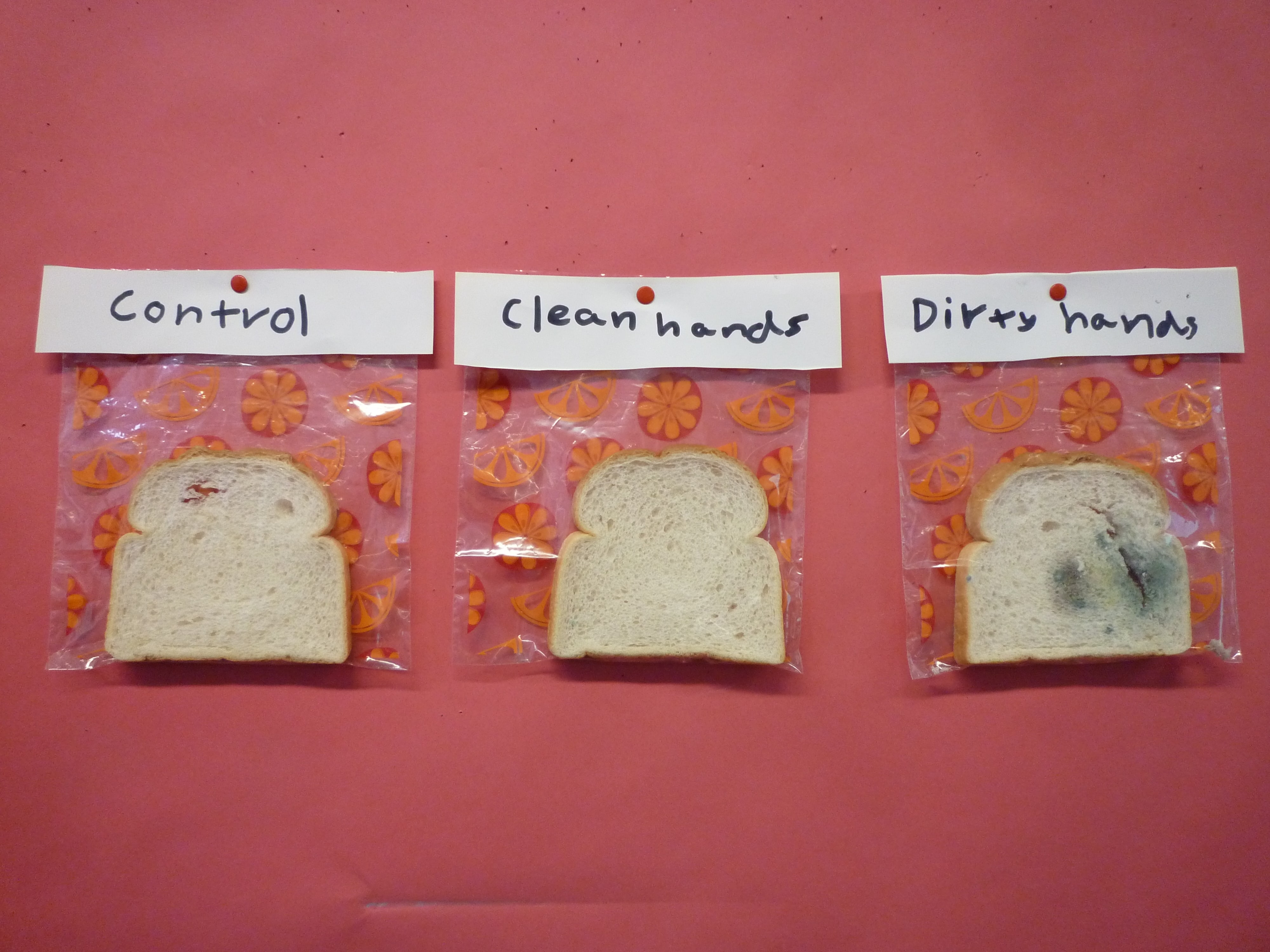
Tip: For the moudly bread experiment, ask the children to investigate what happens when dirty hands and cleaned hands are used to swab the bread. Observe if there are any differences in the mould that grows on the bread.
 What good questions can you ask in this lesson?
| Remembering | Understanding | Applying | Analysing | Evaluating | Creating | |
|---|---|---|---|---|---|---|
| Demonstration of Cleanliness and Hygiene | What is on your hands? | What is sticking on your hands? | Did the dry toilet paper washed the glitter off your hands? | What is used to effectively clean the glitter off your hands? | Do you think the glitter will come off your hands without water? | Can you suggest another way to wash the glitter off your hands? |
| Experiment on Moldy Bread | What is on the bread? | What happened to the bread? | How do we prevent mould from growing on bread? | Which bread is the mouldiest? | Do you think bread will get mouldy if it is not exposed to germs? | Can you suggest a way to keep bread from turning mouldy? |