
Questioning Strategies
Effective Teacher-Child Questioning
Asking the right questions in the classroom will not only provide teachers with important information about their students’ learning progress but also effectively nurtures a student-centred learning environment by encouraging student participation, feedback, and sharing of ideas.
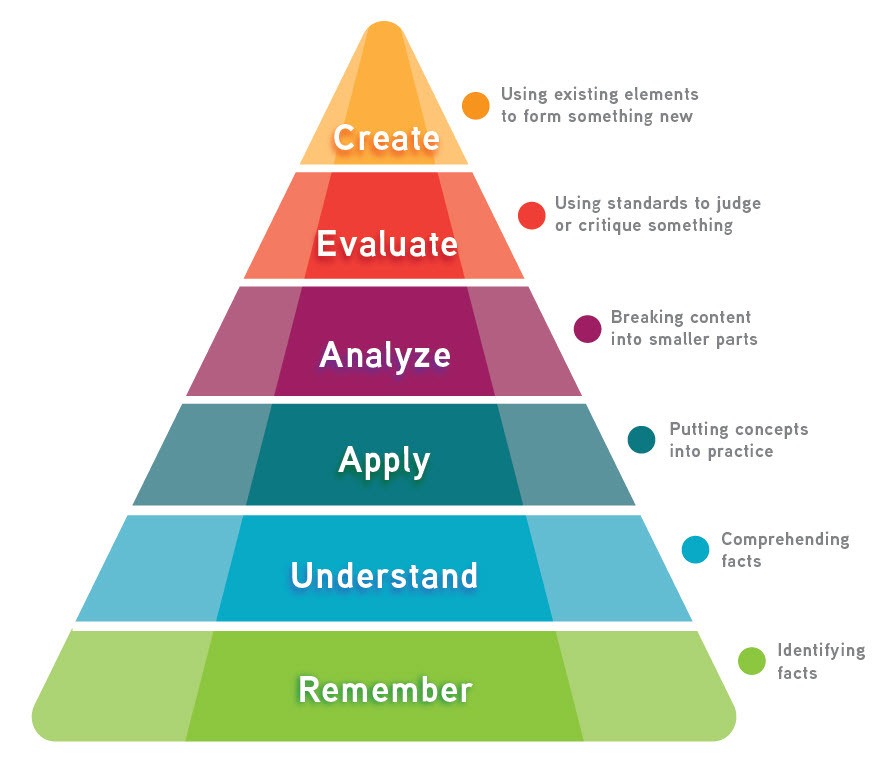
As teachers, questions and answers are part and parcel of the teaching and learning process. The ‘Revised Bloom’s Taxonomy’ (2001) lays out six cognitive processes which frames the questioning starters for each level of thinking.
Here are effective Revised Bloom’s Taxonomy question starters for this lesson:
| Remembering | Understanding | Applying | Analyzing | Evaluating | Creating | |
| Flower Dissection | What are parts of a plant? | Are flowers part of a plant? | Can you give examples of flowers? | Which part of a flower attracts insects? Which part of a flower produces pollen? | What do you think will happen when a flower produces nectar? Which is more important? Petal? Stamen? Stigma? Ovary? | What can you do to help flowers bloom and grow healthily? |
| Flower Pollination | What is flower pollination? | Why do flowers need to pollinate? | How do flowers attract insects for pollination? | Which parts of a flower are needed for pollination to take place? | Why do you think insects are attracted to the nectar of a flower? | What would happen if a flower stops producing nectar? |
| Magic Paper Flower | Which part of the flower is its petals? | What happens to the petals of a flower when it blooms? | Can you name flowers that have big/small/coloured petals? | What is developed/produced after a flower blooms? | How would you know when a flower has bloomed? |
Great work! You’ve completed all the topics for Lesson 3: Flowers of Level 2.
Now, it is time to put your knowledge to the test!
Click Quiz on the left sidebar to test your knowledge on what you’ve learned so far.
Do you think you can answer all the questions correctly? Good Luck!